

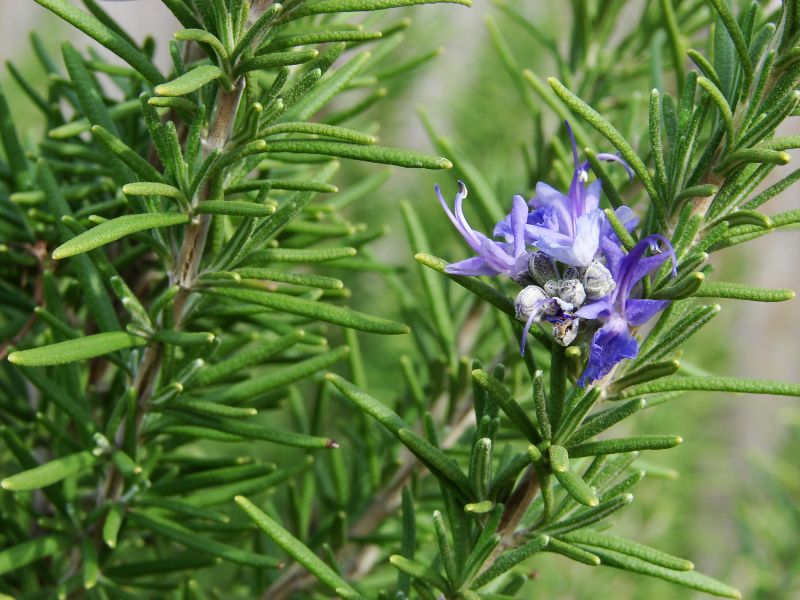
Courtesy Wikimedia, public domain
Hi-res image: https://upload.wikimedia.org/wikipedia/commons/f/f4/Rosemary-7560.jpg
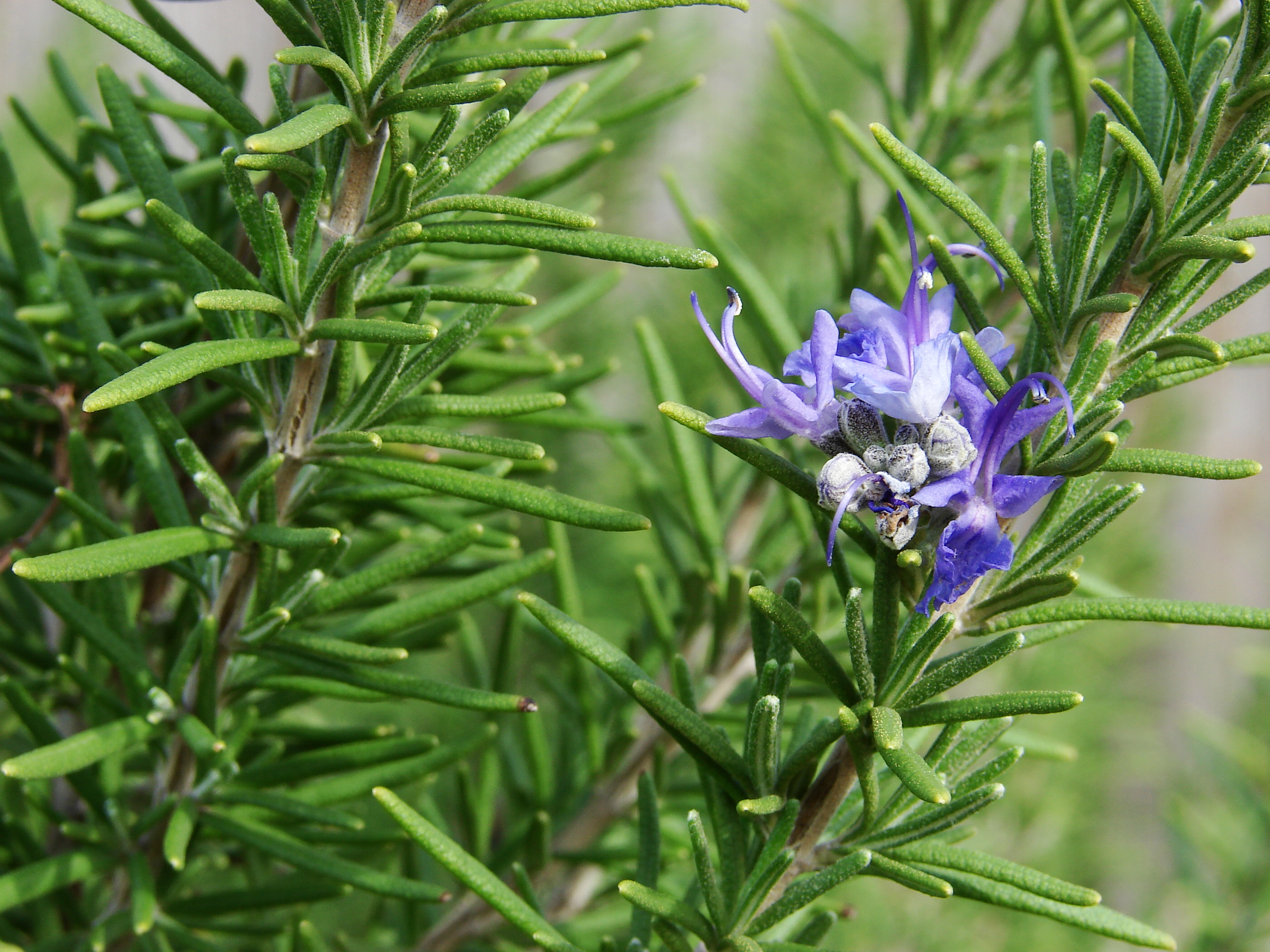
Rosemary was introduced to America by European settlers, and in 17th-century New Amsterdam it was a highly valued kitchen staple as well as a healing herb. Adriaen van der Donck included it in the list of plants growing in the colony’s medicinal gardens in his 1655 Description of New Netherland. Dutch households used its fragrant leaves to ease headaches, settle the stomach, and “strengthen the memory,” reflecting long-standing European herbal beliefs.
Bundles of rosemary hung in homes and in Hans Kierstede’s apothecary on Pearl Street, where it joined other drying herbs used to purify the air and ward off illness. Drying preserved its fragrance and medicinal strength for months. Contemporary herbals—such as those by Rembert Dodoens and John Gerard, common in New Netherland and New England households—recommended a wide range of preparations: rosemary tea for comfort and digestion; distilled rosemary water as a tonic or wash; and salves made by pounding rosemary and mixing it with warmed beeswax to ease muscle pains, a practice followed in the Kierstede household, where bees were kept in their medicinal garden.
Whether infused into tonics or steeped in warm washes to soothe aches, rosemary offered settlers comfort and a familiar thread of Old-World knowledge in a new and changing land. Native communities, meanwhile, relied on their own aromatic plants—such as sage, sweetgrass, cedar, and yarrow—for cleansing, healing, and ceremonial purposes.